

GATEHOUSE
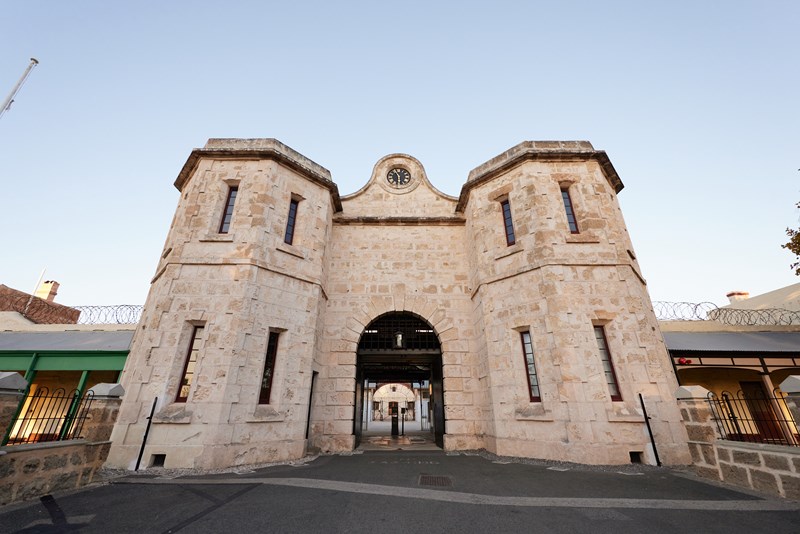
The Gatehouse and Entry Complex is a key historical, convict-built component of Fremantle Prison. The Gatehouse is part of the dominant facade of the Prison, with its central location on the Terrace emphasising its primacy and importance. It is highly visible on the approach to the Prison, highly intact relative to its original form and detailing, and retains its original intimidating castle-like character. Other convict-built elements of the Complex include the two Guard Rooms (now Non-Contact Visits Room and Gift Shop), Main Gates, Wray Gates and Fire Engine Room (now Generator Room), which together created a central enclosed courtyard. Later elements include the Reception Rooms, Visitor Room (now Switch Room), and Public Works Department (PWD) store (now Café).
Historically, the Gatehouse and Entry Complex retains its purpose-built function as the main entry point into the Prison site, albeit for visitors and tourists rather than inmates. The buildings generally, despite having been adapted to a variety of uses over time, are highly intact and reveal in their fabric the history of their successive occupations.
MAIN CELL BLOCK
The Main Cell Block is a key historical convict-built component of Fremantle Prison and the central dominating feature of the site. It is a four-storey limestone building of utilitarian character, approximately 150m in length orientated on a north–south axis. Its simplicity and impressive length are accentuated by a central projecting Chapel of early Victorian style. Its position within the Prison, including the axial relationship with the Wray Gates and through this to the Gatehouse, is demonstrative of the symmetrical planning of the complex which placed the Main Cell Block at its centre.
The building was originally constructed in two stages, with the south wing built between 1852 and mid-1855, and the north wing and Chapel from mid-1855 to 1857. The building was in continuous use as a state and colonial prison for 136 years until the closure of Fremantle Prison in 1991. Since that time, it has operated as a cultural heritage tourism site. The building remains the prominent landmark feature of the whole site that is continually conserved and interpreted as its main tourism attraction, with much of the building open to the public for supervised tours.
It retains substantial physical evidence of its convict-era construction and subsequent history as a colonial and state prison. Architecturally and aesthetically the building is remarkably intact to its original form and gains considerable strength and presence from its scale, materiality, repetitious detailing, and simplicity of expression.
FEMALE DIVISION
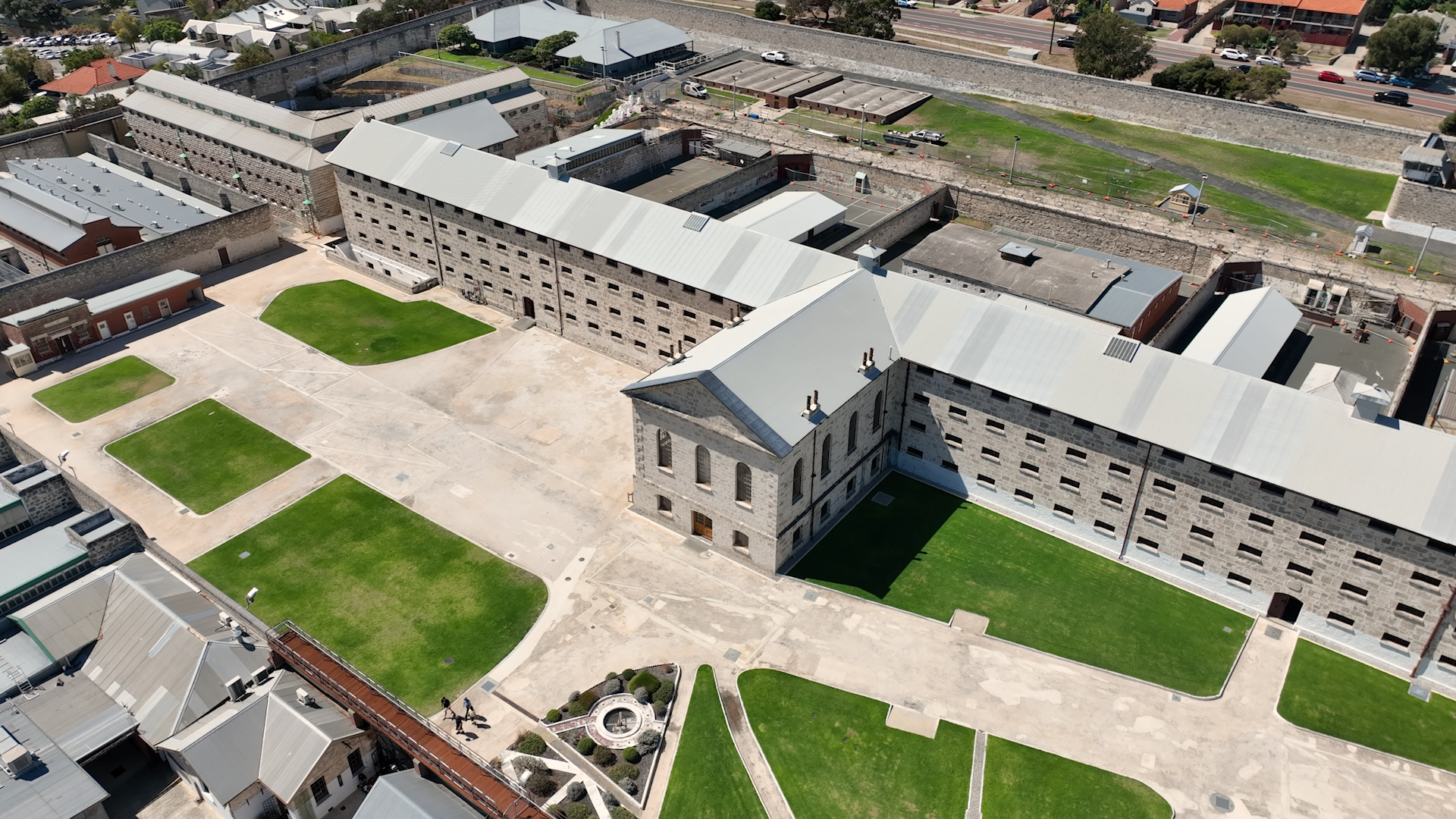
Female Division is a key historical development of the post‑convict era prison, incorporating and adapting the earlier 1850s convict era services buildings of the cookhouse, bakehouse and washhouse. In 1886, a wall was built around these buildings for conversion as the first separate women’s prison in Western Australia. Due to the increased female prison population, it was extended in the 1890s with the creation of a new building wing, with a further upper storey added in 1909. It is distinguished in the prison context through being a ‘gaol within a gaol’, which retains its separate and confined character.
When inmates were transferred to the new women’s prison at Bandyup in 1970, the vacated buildings were taken over by the male prison to become offices and classrooms for the Education and Psychological Assessment Centre. In 1993, after the prison’s closure, the buildings were adapted for use by the Department of Training’s South Metropolitan College of TAFE’s Art and Design. From 2015, the building complex continues to be leased to the Youth Hostel Association (YHA) for short‑term budget accommodation, with a segregated portion of the cells used for Prison tours.
PRISON HOSPITAL
The Hospital is a key historical convict‑built component of Fremantle Prison, with its establishment as a freestanding building on an elevated site, in relative isolation from the remainder of the 1850s Prison, being demonstrative of its use and the perceived need to separate and segregate sick prisoners.
The hospital was built in 1857–59 and occupied until 1886, when the hospital function temporarily moved to the Main Cell Block. During this time, the hospital building was used as a female prison and as a depot for invalids. From 1904 until 1991, the building was again used as a hospital. It was previosuly leased to The Literature Centre, with accommodation for authors in residence.
The building is H‑shaped in plan and of single‑storey masonry construction. It features a wide verandah with timber posts. Architecturally and aesthetically, the building is distinguished by its relatively simple yet functional planning, with a central main ward adjoined by wings, and the use of verandahs. The garden and stepped terrace on the west side, and the stone and concrete steps on the south‑west, are also distinguishing features.

WEST WORKSHOPS
The West Workshops are a key historical component of the post‑convict era of the Prison. They were built at the turn of the century as a result of the 1899 Commission of Enquiry. Their introduction responded to a change in the treatment of prisoners and a desire to provide a form of employment and training inside the walls. They reflect a definite conscious decision to provide particular buildings to accommodate this use. Running from north to south and forming a series of repeated spaces, they originally contained a Tailor’s, Bookbinder’s, Shoemaker’s, Matmaker’s, and Painter’s Workshop.
They are constructed as an infill building behind the pre‑existing perimeter walls of Female Division to the north, the Gift Shop (former Visitors Contact Room) and Café (former Offices) to the south, and a Sterile Zone to the west. The site of the building, prior to construction, formed part of the Parade Ground. The external limestone walls conceal a prominent saw‑tooth roof structure that is also visible internally.
Presently, the southern three structural bays of the building are used for storage of collection and exhibition of curatorial items from the Prison’s history. The northern two structural bays are occupied by the Youth Hostel Association (YHA) for their kitchen, communal area, and ablution facilities.

EAST WORKSHOPS
The East Workshops are a key historical convict‑built component of Fremantle Prison and represent the earliest workshop facilities on the site. Established from the early 1850s, they were integral to the construction, maintenance and operation of the prison, housing the original Carpenters’ and Blacksmiths’ Shops where materials and fittings for the prison and other government works were produced.
Over time, the East Workshops were adapted in response to changing penal practices and operational needs. Following the construction of the West Workshops in the early twentieth century, they continued to function as carpentry and metal workshops and were further modified in the mid to late twentieth century, with the former yard roofed over to create larger industrial spaces, including metal and automotive workshops.
Since the closure of the prison in 1991, the East Workshops are now used for events and functions, with part of the complex retained for curatorial storage and operational purposes.
NEW DIVISION
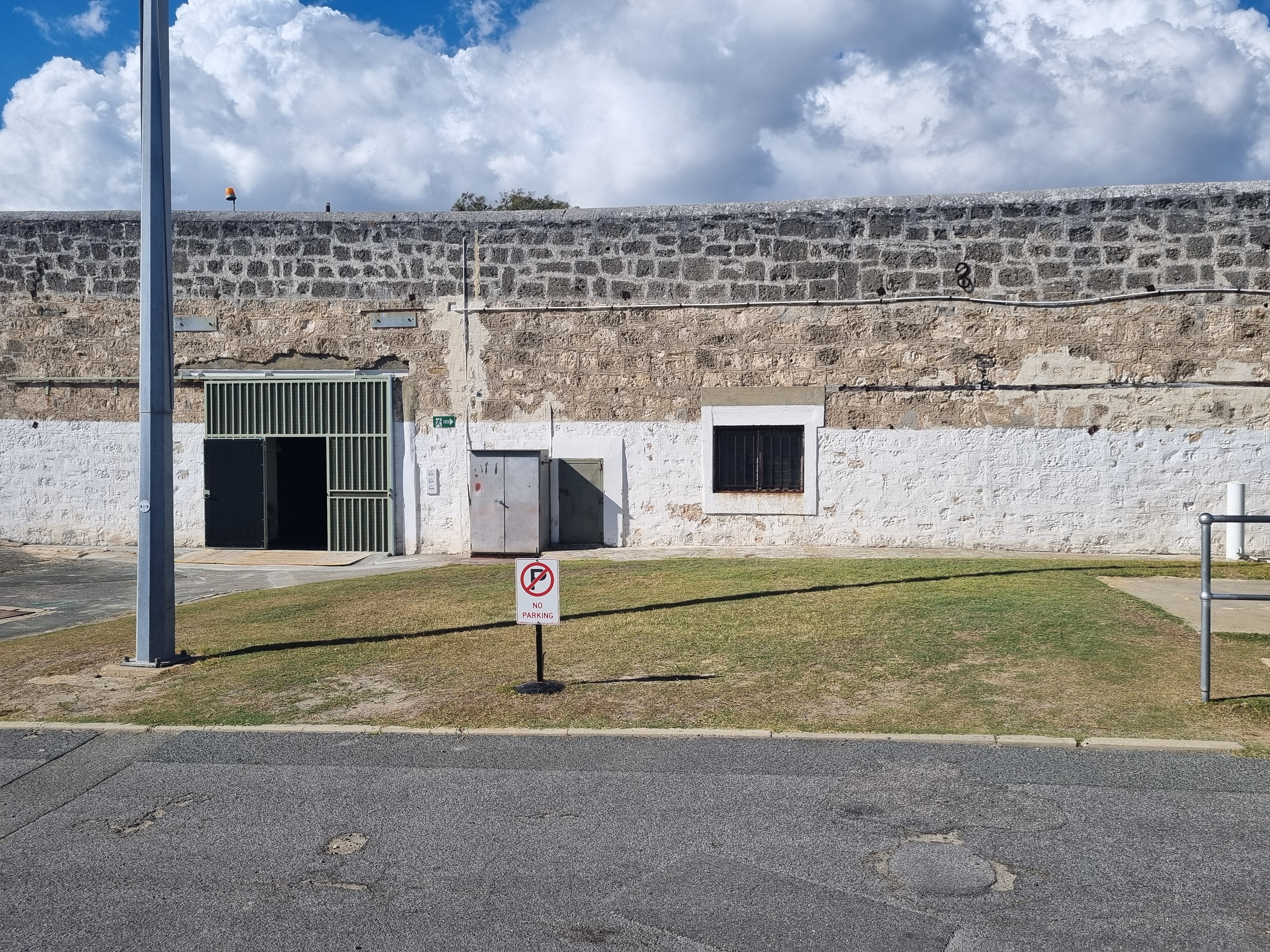
New Division at Fremantle Prison, a three storey Rottnest lsland/Wadjemup sandstone and brick building with associated yard, has cultural heritage significance for the following reasons:
It is the only prison facility in Western Australia purpose built to implement the separate system of imprisonment advocated by Superintendent WA George and the 1899 Commission of Inquiry into Western Australia's penal system;
The form and scale of the building clearly demonstrates its function and together with the yard and sterile zones, creates an evocative and discrete complex within the prison compound;
While stylistically distinct from other buildings in the prison complex with its stonework, brick quoining and clerestory roof, it achieves coherence and extends the monumental quality of the Main Cell Block through its overall scale and materiality;
Through physical adaptations of the cells, yard and associated changes in use - including prisoners who required particular management strategies such as being on death row, isolation or observation - it provides evidence of the evolution of penal philosophy and the management of male prisoners in Western Australia throughout the twentieth century;
It has a high degree of integrity and authenticity and extensive research and interpretative potential in relation to the daily lives of prison inmates and officers;
It is demonstrative of the advances in technology and materials at the time of construction, including the use of steel framing for the galleries, suspended concrete floors to the upper floor cells and the introduction of electricity for the first time at the prison used for lighting;
It is a dominant feature of the north-east corner of the prison site and is a distinctive feature of the prison when viewed from the surrounding area, particularly Monument Hill; and
It was used by the Australian Army as a military detention centre during both world wars and the 1920s.


